
The Complete Guide to Getting Your Body Out of Survival Mode
The Complete Guide to Getting Your Body Out of Survival Mode
Many people today feel exhausted, overwhelmed, anxious, or stuck in persistent health issues — yet medical tests often come back normal.
Sleep is disrupted.
Energy crashes throughout the day.
Digestion becomes unpredictable.
The body feels tense, wired, or on edge.
If this sounds familiar, there is a strong possibility your body has been stuck in survival mode for too long.
Survival mode is the body's natural stress response — designed to protect you from danger.
But when stress becomes chronic, this protective system can begin disrupting the body's ability to heal.
In this guide, we'll explore:
• What survival mode actually is
• How fight-or-flight physiology affects the body
• The symptoms of Survival Mode
• The connection between emotional stress and physical health
• How to guide your nervous system back into healing mode
What Is Survival Mode?
Survival mode is controlled by the sympathetic nervous system, part of the autonomic nervous system responsible for responding to perceived threats.
When the brain detects danger — real or perceived — it activates the fight or flight response.
This response prepares the body to act quickly by releasing stress hormones such as adrenaline and cortisol.
Physiological changes include:
• Increased heart rate
• Faster breathing
• Heightened alertness
• Reduced digestion
• Blood flow redirected to muscles
• Increased inflammation
In short, the body shifts into protection instead of repair.
This response is incredibly helpful in genuine danger.
But modern life rarely involves escaping predators.
Instead, our nervous system reacts to ongoing psychological and emotional stressors such as:
• work pressure
• relationship challenges
• unresolved emotional stress
• financial concerns
• lack of rest or recovery
Over time, the body can become stuck in survival mode, even when no immediate threat exists.
Fight or Flight Physiology: What Happens Inside the Body
When the sympathetic nervous system remains activated for long periods, it begins to influence many systems in the body.
The body prioritises survival over healing.
This can lead to:
Elevated stress hormones
Chronic cortisol elevation can disrupt sleep, blood sugar regulation, immune function, and metabolism.
Digestive suppression
The body diverts energy away from digestion during stress, which may contribute to bloating, IBS symptoms, or poor nutrient absorption.
Reduced immune efficiency
When the body remains in defence mode, immune resilience may decrease.
Hormonal imbalance
Chronic stress can affect reproductive hormones, thyroid function, and metabolic regulation.
Increased inflammation
Long-term stress signals can contribute to systemic inflammation in the body.
Over time, symptoms begin to appear not because the body is failing — but because it has been prioritising protection for too long.
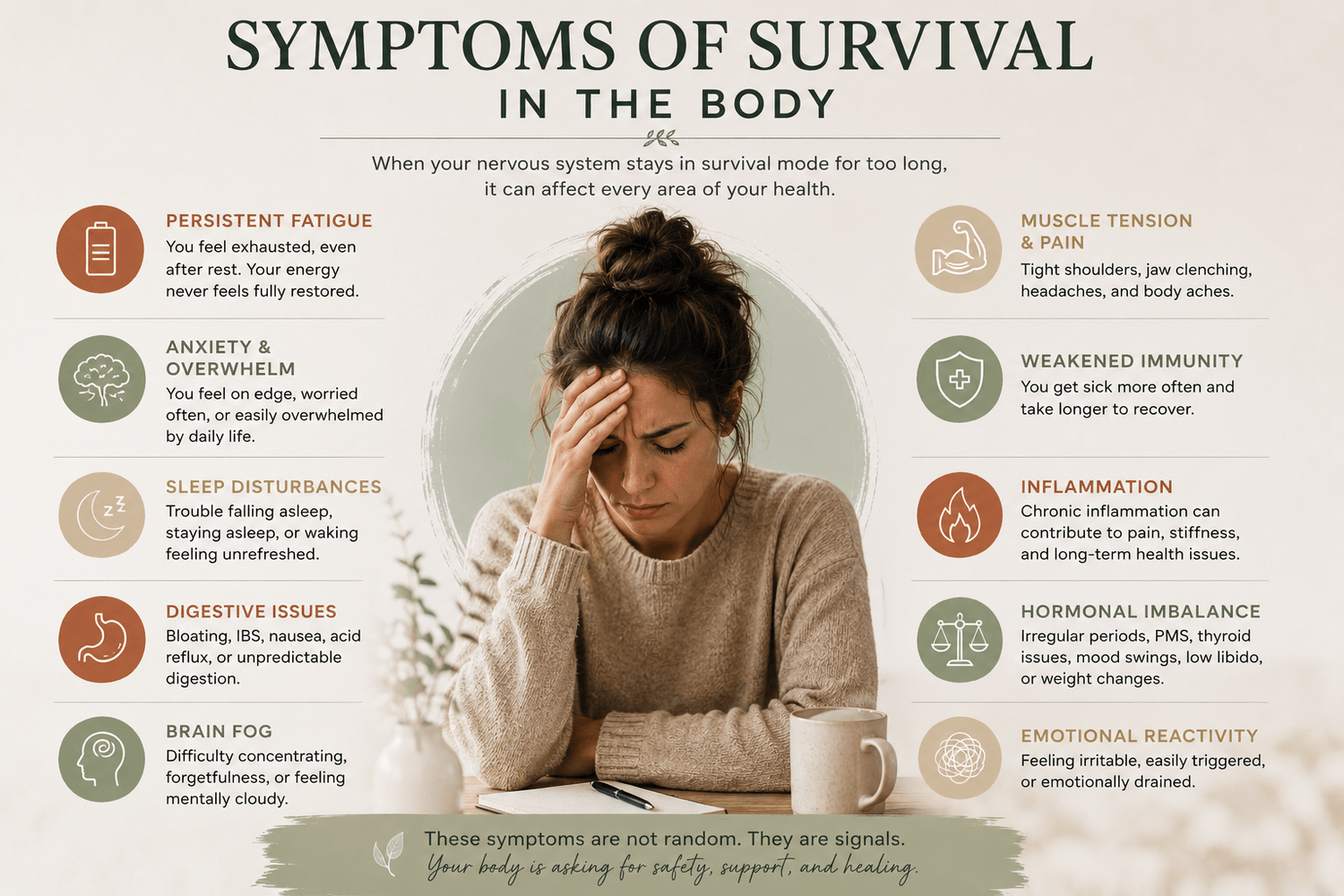
Symptoms of Survival in the Body
When the nervous system stays stuck in survival mode for too long, it can begin affecting every area of health and wellbeing.
Some of the most common symptoms include:
• Persistent fatigue or exhaustion
• Anxiety, overwhelm, or feeling constantly on edge
• Sleep disturbances or insomnia
• Digestive issues such as bloating, IBS, reflux, or nausea
• Brain fog or difficulty concentrating
• Muscle tension, jaw clenching, headaches, or body aches
• Weakened immunity or getting sick more often
• Chronic inflammation or pain
• Hormonal imbalances and mood swings
• Emotional reactivity, irritability, or feeling emotionally drained
• Feeling disconnected, numb, or shut down
• Racing thoughts or difficulty relaxing
• Burnout and feeling “wired but tired”
• Increased stress sensitivity or panic responses
• Low motivation, low mood, or loss of joy
These symptoms are not random.
Very often, they are signs that the body has been working hard to protect you for a long time.
Your body is not broken.
It may simply be stuck in protection instead of healing.
The Mind-Body Connection
One of the most important insights emerging from modern health research is the powerful connection between the mind and the body.
Our thoughts, emotions, and experiences directly influence our nervous system and physiology.
When emotional stress remains unresolved, the body may continue signalling threat.
This does not mean symptoms are "in your head."
Rather, it highlights how deeply interconnected our emotional and physical systems are.
Emotional stress can activate the same physiological stress response as physical danger.
For example:
• chronic worry may maintain cortisol elevation
• unresolved emotional experiences may keep the nervous system on high alert
• ongoing self-pressure or perfectionism can reinforce internal stress patterns
Over time, this constant activation can prevent the body from fully entering the restorative states needed for healing.
Healing Happens in the Parasympathetic Nervous System
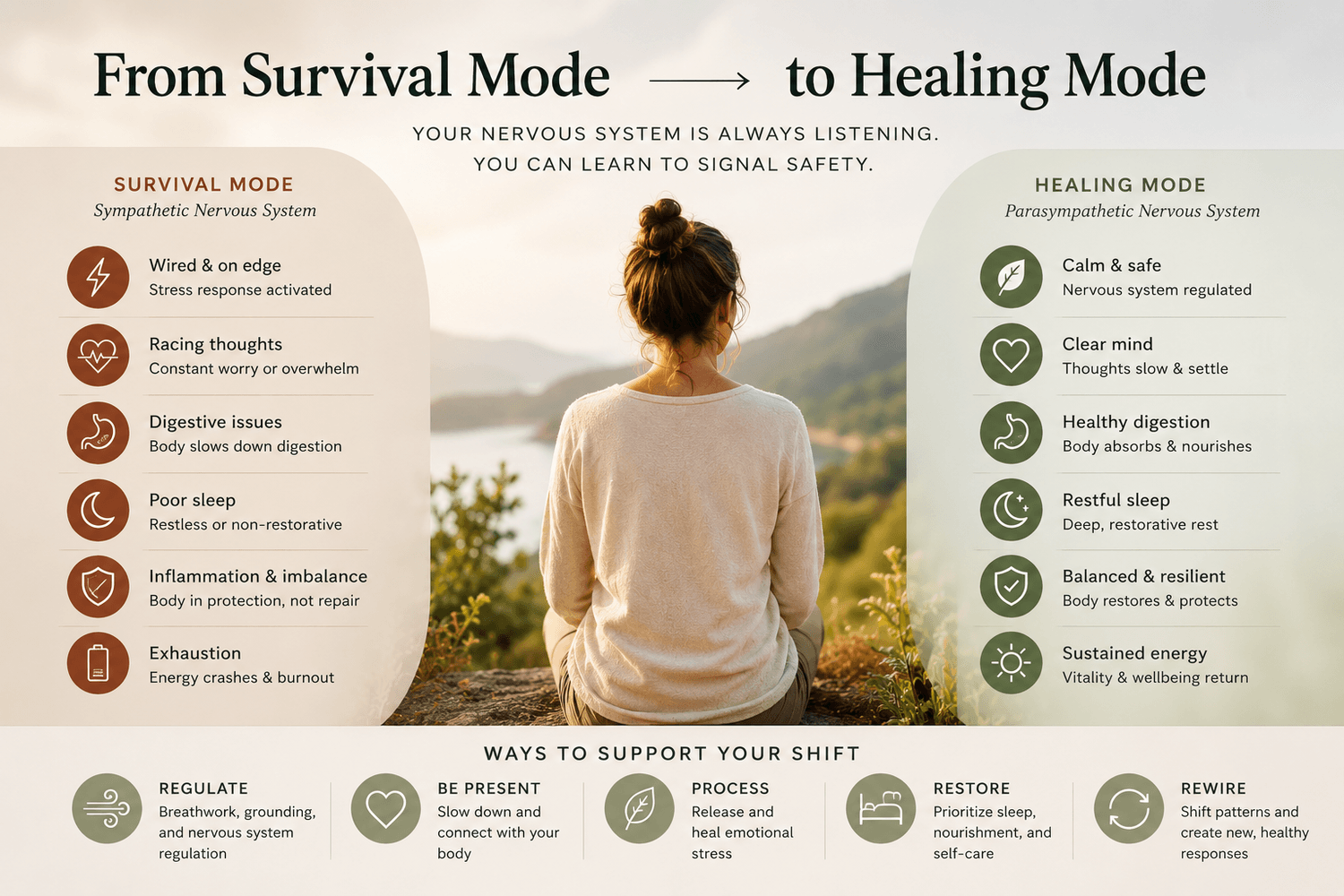
While the sympathetic system activates survival responses, the parasympathetic nervous system is responsible for healing and restoration.
This state is often referred to as rest, digest and repair.
When the body enters parasympathetic mode:
• heart rate slows
• digestion improves
• inflammation decreases
• immune function strengthens
• hormones stabilise
• sleep deepens
• cellular repair processes activate
In other words, the body shifts from protection to restoration.
This is the environment where true healing becomes possible.
Guiding the Nervous System Back Into Healing
The key to getting out of survival mode is not forcing the body to relax.
Instead, it involves creating signals of safety that allow the nervous system to naturally shift out of protection.
Some helpful practices include:
Nervous System Regulation
Practices such as breathwork, grounding, and gentle awareness exercises can help signal safety to the body.
Presence
Slowing down and becoming present with the body helps interrupt automatic stress patterns.
Emotional Processing
Acknowledging and processing emotional experiences can reduce the internal signals that keep the nervous system activated.
Self-Support and Rest
Adequate sleep, nourishment, and supportive environments help restore the body's baseline sense of safety.
Rewiring Stress Patterns
Becoming aware of subconscious patterns that maintain stress responses can allow new, healthier responses to develop.
Healing is rarely about doing more.
Often it involves helping the body feel safe enough to soften out of defence.
Moving From Survival to Healing
When the nervous system finally feels safe enough to come out of survival mode, the body can begin doing what it was always designed to do — heal.
Many people begin to notice profound shifts such as:
• deeper, more restorative sleep
• stable energy instead of exhaustion and burnout
• calmer emotions and less overwhelm
• improved digestion and reduced inflammation
• clearer thinking and better focus
• greater resilience to stress
• feeling more present, connected, and alive
• improved mood, motivation, and emotional balance
• a renewed sense of hope, peace, and vitality
These changes happen because the body is no longer using all of its energy trying to survive.
Instead of constantly staying on high alert, the nervous system begins shifting from protection into repair, restoration, and regulation.
This is where true healing starts to occur.
The body can finally redirect energy back into:
✨ healing
✨ repairing
✨ restoring
✨ balancing
✨ thriving
Healing becomes less about fighting symptoms and forcing the body to change…
And more about creating the internal safety that allows the body to naturally return to balance.
Because your body is not working against you.
It has been working hard to protect you.
And when the body feels safe again, remarkable changes can happen.
Ready To Start Shifting Out of Survival Mode?
Start With My Free Survival Identities Assessment
For years you've been trying to fix the symptoms.
What if the real answer is understanding the survival pattern beneath them?

✨ Ready For Deeper Healing?
You were not born to simply survive.
✨ You were born to truly thrive! ✨

HEY, I’M ALYSHA
Mind-Body Health Specialist
For over a decade, I have worked with individuals experiencing chronic stress, complex health problems, emotional overwhelm, and persistent symptoms that conventional pathways have been unable to resolve.
My work focuses on identifying and resolving the underlying stress patterns stored within the nervous system and subconscious — the patterns that silently maintain survival physiology.
When the internal environment shifts from threat to safety, the body’s natural healing mechanisms re-engage.
This is not symptom management.
This is root-cause healing.


